
Living & Learning
Living & Learning
Recurring
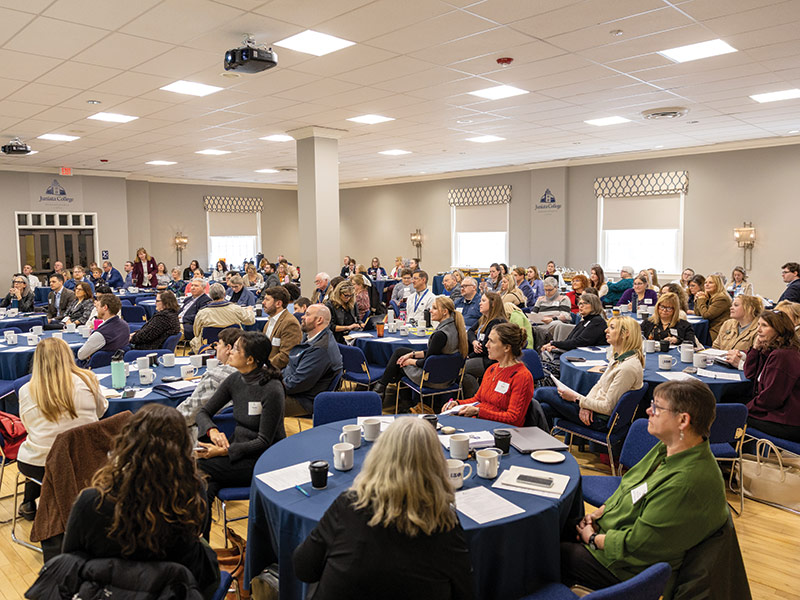
Building a Health Network for Rural Communities
Juniata received a $100,000 planning grant from the U.S. Department of Health and Human Services’ Health Resources and Services Administration to launch the Rural Communities Collaborative, a countywide initiative to strengthen health outcomes in Huntingdon County. The project, led by Sarah Worley ’00, professor of communication and director of community engaged learning, builds upon earlier AmeriCorps VISTA and community-engaged learning initiatives and will bring together healthcare providers, educators, businesses, and community organizations to design a cross-sector rural health network. Founding partners include Broad Top Area Medical Center, Mainstream Counseling, Inc., and Central Pennsylvania Clinic, with more than 15 additional organizations expressing interest. Guided by systems thinking and the social determinants of health framework, the Collaborative will focus on improving access to care, workforce development, and coordination of services. The planning effort aims to create a sustainable model to address provider shortages and transportation barriers.
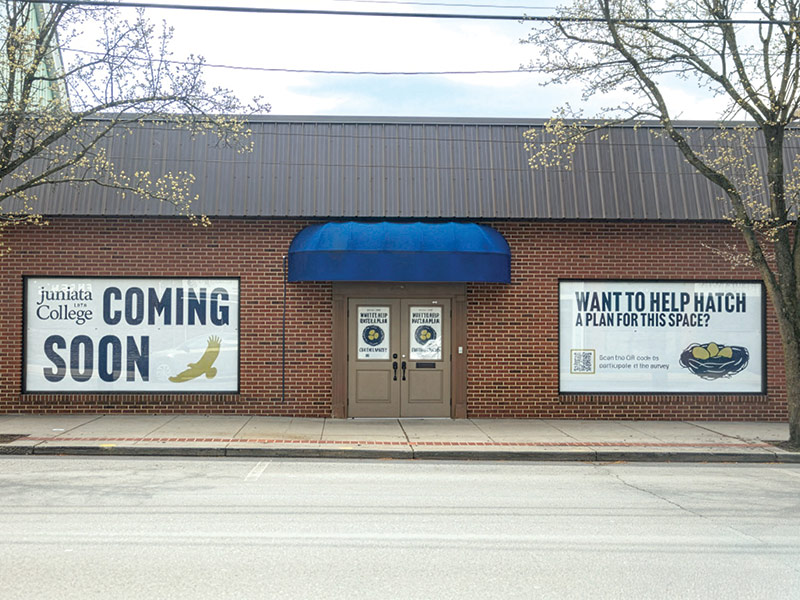
Downtown Space and Scholarship Strengthen Community Ties
A new partnership is bringing fresh life to a former storefront in downtown Huntingdon
while opening doors for local students. Through an agreement with AAA Central Penn,
a building that housed a former branch location at 608 Washington Street has been
donated to the College to support community-focused programming and activities that
connect campus and town. The downtown site fulfills a long-standing goal of establishing
a visible, accessible space for engagement beyond campus, complementing existing off-campus
locations that support entrepreneurship and small business development.
The partnership also creates an annual scholarship for a graduating high school senior
from Huntingdon or Juniata county, strengthening educational access for students in
the region. Together, the donated property and scholarship reflect a shared commitment
to community investment, collaboration, and opportunity — linking education, local
vitality, and long-term regional impact.
Federal Grant Expands Access to Chemistry Education
A $400,000 federal award co-sponsored by U.S. Senators Dave McCormick and John Fetterman will support upgrades to chemistry education and expand access to modern laboratory equipment in central Pennsylvania. The funding will be used to purchase advanced instrumentation for college-level instruction and faculty-mentored research, while also opening laboratory experiences to local high school students through hands-on field trips. The initiative strengthens pathways to STEM careers, particularly in rural communities where access to advanced science resources can be limited. The project was selected as part of a national group of 62 awards supporting priorities such as education, healthcare, infrastructure, and economic development. By enhancing experiential learning and building stronger connections between secondary and postsecondary education, the investment helps prepare students for in-demand STEM fields and supports long-term regional workforce and economic growth.
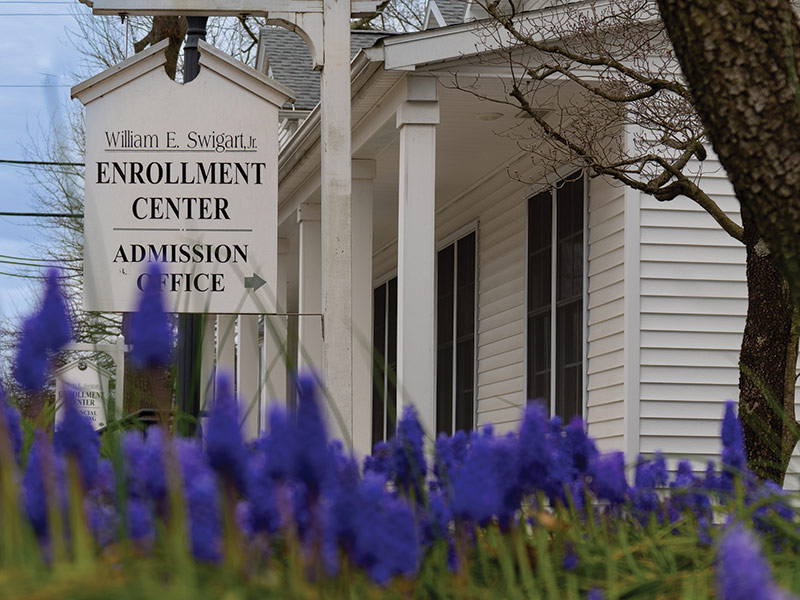
Enrollment Gains in a Challenging Higher Education Landscape
As higher education confronts the demographic cliff and a shrinking pool of applicants, Juniata is growing through innovation and connection. Fall 2025 enrollment showed a nine percent increase in headcount since 2022, reaching 1,363 students. The increase is driven by academic expansion, athletic recruitment, and student success initiatives. New programs in nursing and civil and environmental engineering are attracting strong interest, alongside accelerated dual-degree pathways that enable completion of bachelor’s and master’s degrees in four years. Nearly one in five new students plan to pursue POEs new to the College in the past five years. Out-of-state and community college transfer enrollment continue to rise, supported by national recognition for classroom experience.
A Standout for Sustainability
Juniata College has been recognized in The Princeton Review Guide to Green Colleges: 2026 Edition for its strong commitment to environmentally responsible practices. The College’s sustainability initiatives span infrastructure upgrades, curriculum, and student-led projects, including energy-saving lighting improvements and hands-on learning at the Raystown Field Station in forestry, aquatic ecology, and wildlife conservation. Juniata offers a range of sustainability-focused courses and recently launched a master’s program in Applied Ecology and Natural Resource Management. One of 19 Pennsylvania schools on the list, Juniata joins small liberal arts colleges and major research universities alike in demonstrating a holistic approach to environmental stewardship, equity, and sustainability education.
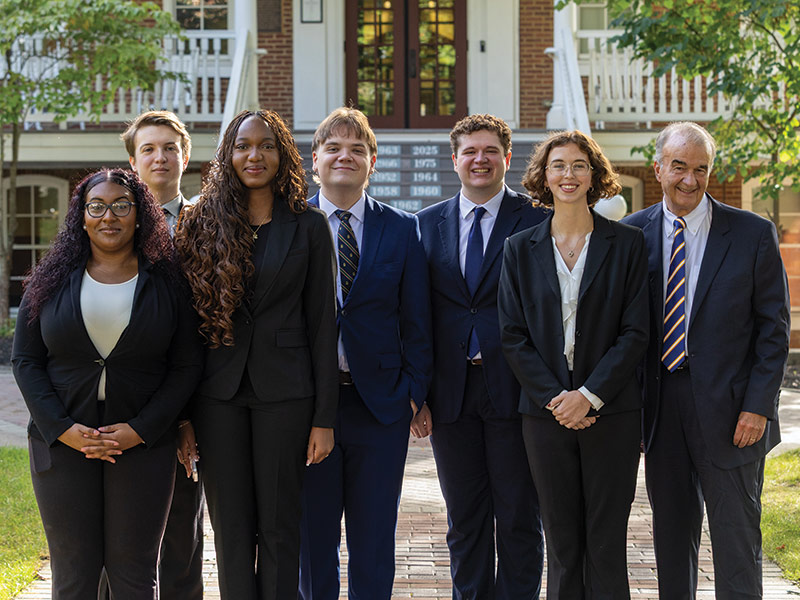
Mock Trial Teams Shine in Competitive Season
The 2025-2026 Juniata College Mock Trial season concluded on a high note, showcasing both competitive achievement and the character of its team members. Juniata advanced to the Opening Round Championship Series of the national tournament, demonstrating the program’s strength on a national stage. At their final competition, the Blue Team earned the prestigious Spirit of the AMTA Award, voted on by fellow competitors. Peers described Juniata students as outgoing, friendly, and willing to go above and beyond — embodying the ideals of civility, fair play, and justice. It was a season defined not just by success, but by the powerful example that greatness and kindness go together.
Physics Society Achieves National Recognition for 27th Year
The Society of Physics Students (SPS) chapter at Juniata has earned the Outstanding Chapter Award from the SPS National Office for the 27th consecutive year, marking the longest uninterrupted streak of recognition in the country. Fewer than 15 percent of SPS chapters nationwide receive the distinction, which highlights excellence in student-led engagement, outreach, and professional development. The chapter’s activities span campus involvement, public outreach, and participation in national SPS programs, providing students hands-on experience in physics and related fields. The chapter is advised by Jim Borgardt, William W. Woolford Professor of Physics, and continues to set a standard for student achievement and leadership in the physical sciences.
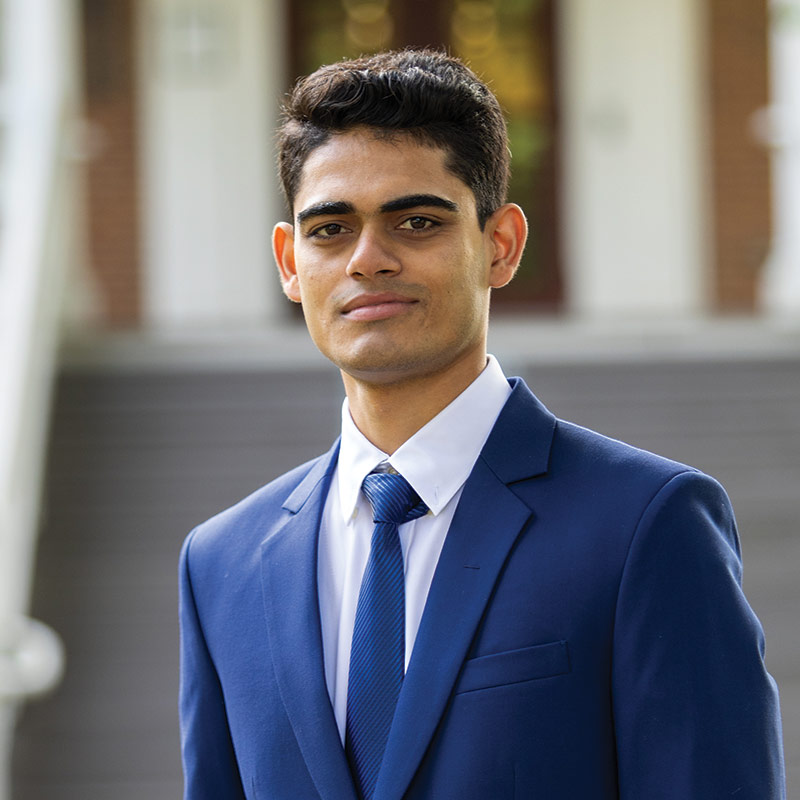
Anjan Kumar '27
Jamshedpur, India
POE: Business Analytics
Interview by April Feagley g’23
What influenced your decision to attend Juniata College, and how has your experience compared with your expectations?
I had to look at multiple dynamics when choosing a college. The kind of people you’re going to work with really matters. The faculty, student population, and overall culture were important to me. When I arrived as a first-generation college student from India there was a big cultural and academic shock. I thought I’d have to understand the dynamics of America to be able to be part of the community and partner with faculty members, but I quickly realized that at Juniata, there are no barriers between you and your faculty members. My experience has been like a fine wine, getting better with time.
What advice would you offer to other international students?
One moment that was especially formative for me was changing my POE. I came in as a computer science student, but I realized I wanted to study business and enter the financial services industry. My professor encouraged me, saying, “Figure out what you want to do and take the classes that you like.” My advice to other international students is simple: ask for things, do not shy away from talking to people, and speak up for yourself. Juniata has taught me to make informed decisions, be humble, and rely on the incredible community around you.
What drew you to Mock Trial and how has participating influenced you?
Attorney David Andrews ’74 has been a tremendous guide for me and encouraged me to join. When I re-searched the program, I found that our team is one of the best in the nation, competing against top schools like Princeton, which we even beat. Representing Juniata at such a high level was a source of pride for me. Participating has improved my speaking skills and strengthened my critical thinking, since in trials you have to think on your feet. Being part of this competitive team has enhanced my confidence, communication, and understanding of leadership.
Anjan Kumar ’27 plans for a career in investment banking and private equity. Connections with alumni in the field have led to mentorship and internship opportunities that make the most of his Juniata education.
How do you decide where to invest your time and energy on campus?
The best way I decide where to invest my time is by following my interests and asking for opportunities. When you want something and you ask for it at Juniata, you get it. I joined the Juniata Eagle Fund, where a small group of students manages $300,000, and even started my own Finance and Investing Club. Pursue what you’re passionate about, and people at Juniata are always willing to help you get what you’re looking for. Faculty and staff go out of their way to guide you, connect you with alumni, and pave the path toward your goals.

The Big Question

Robb Conrad Lauzon, assistant professor of communication, reflects on who preserves history in a digital age and argues that while powerful technologies archive our records, everyday rituals remain essential to collective memory.
Who owns history in a digital world?
By Robb Conrad Lauzon, assistant professor of communicationThe cliché that “history is written by the victors” has long implied that those who can preserve the materials we use to tell our stories ultimately decide what matters. When the written record’s infrastructure requires AI data centers in thousands of locations across the country, it might be concluded that history is now written by those who can sustain our information ecosystem. The victors have always possessed the ability to carry history across generations. Considering this unsettling truism, we might ask: how can the histories outside of this record also matter?
“Because the digital world is amnesiac, habits of memory atrophy. As everyday experience is increasingly moved online, the mundane rituals that preserve cultural memories compete for access to the archive and ultimately what is reality.”
Those who possess the rare earth minerals, capital, and technical expertise to deliver the compute at the center of this information ecosystem where history is being written will ultimately own history. As it has always been, it is the cultivation of our collective memory through the most mundane of rituals that will enable people to preserve their stories and maintain a grasp on reality.

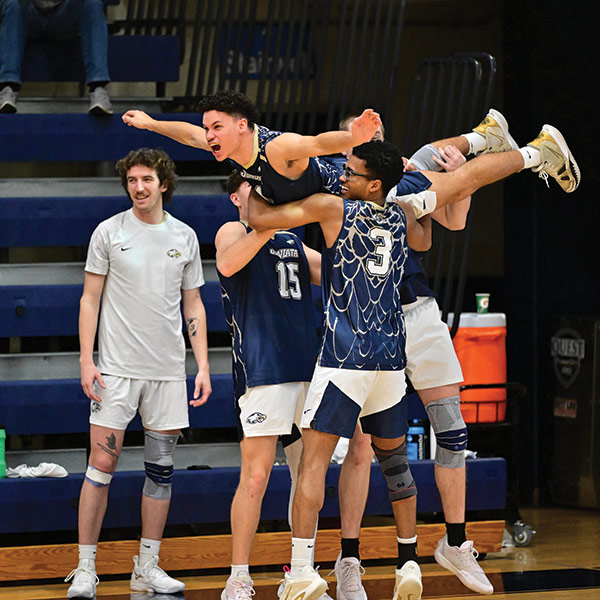
Men’s Volleyball Team Soars to Top National Rankings
The men’s volleyball team has put together an outstanding 2026 campaign, compiling
a 29–2 overall record and capturing the Continental Volleyball Conference (CVC) championship.
The Eagles have excelled against top competition, going 8–2 against nationally ranked
opponents, and will host early rounds of the NCAA Tournament after earning a first-round
bye.
Individually, the team continues to earn national recognition, with multiple players
earning All-Region honors, while several Eagles were named to the All-CVC team. Head
Coach Glenn DeHaven ’07 and his staff were also recognized as CVC Coaching Staff of
the Year, highlighting the program’s continued excellence.
Earlier this season, DeHaven surpassed 350 career wins, a milestone moment in a year
defined by both team success and program growth.
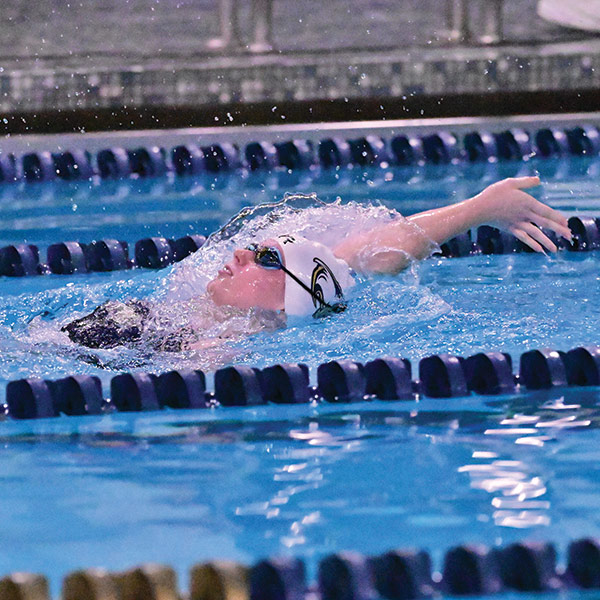
Record-Breaking Season for Swim Teams
The women’s swim team shattered 19 school records, earning the second-highest point total in program history at the Landmark Conference meet. Eleanor Smith ’29, Coltan Swarts ’29, Megan Mikell ’29, and Delany Wetzel ’28 led standout performances, with the quartet of Wetzel, Swarts, Smith, and Dani Cline ’28 taking bronze and setting a school record in the 800-meter freestyle relay. Head Coach Kyle Russell and Assistant Coach Ashley Derrick were named Landmark Conference Coaching Staff of the Year. On the men’s side, the largest roster in over a decade helped break 14 school records and achieve the program’s highest conference meet points since its restart.
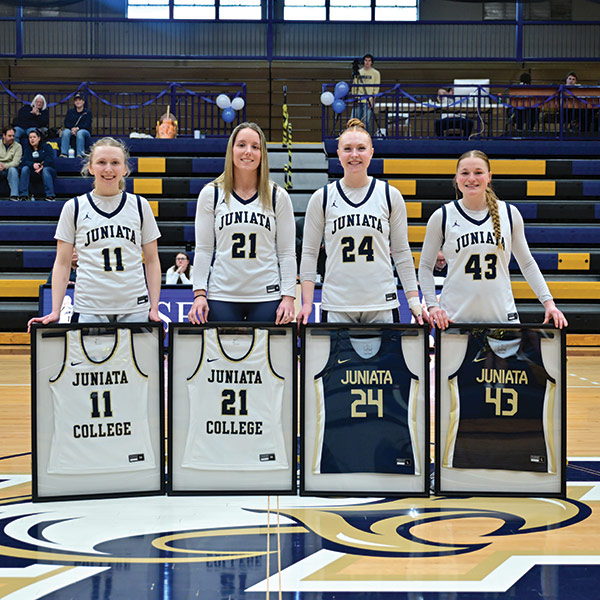
Women’s Basketball Honors Seniors in Season Finale
The women’s basketball team closed the 2025–2026 season against Moravian, celebrating seniors Olivia Berg ’26, Bri Bodtorf ’26, Emma Coolidge ’26, and Emily McCann ’26. Bodtorf had a standout year, ranking third in conference scoring, second in rebounds, third in assists, fifth in steals, and ninth in blocks, and became the 18th player in program history to reach 1,000 career points. Coolidge also ranked third in rebounds, while Berg was ninth in three-pointers per game. The season highlighted strong individual performances and team leadership as the seniors were honored in the final game of their collegiate careers.
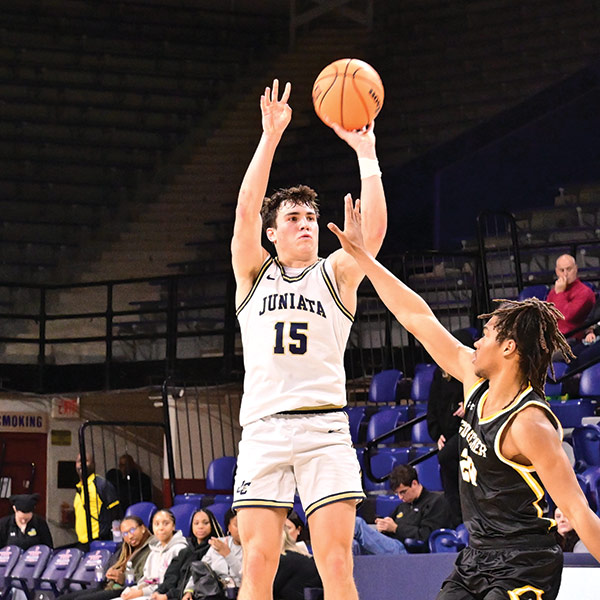
Men’s Basketball Closes Season Strong with Playoff Win
The men’s basketball team ended their season with a decisive win over Moravian, eliminating the Greyhounds from the Landmark Playoffs. Junior guard Ty Kocak ’27 led the charge, scoring 17 points in the second half for a team-high 24. Kocak finished the season eighth in the conference with 17.4 points per game. The team’s defense remained a standout, ranking third in the Landmark in points allowed and steals per game, while also finishing second in turnover margin, highlighting their consistent ability to control the pace and pressure opponents throughout the season.
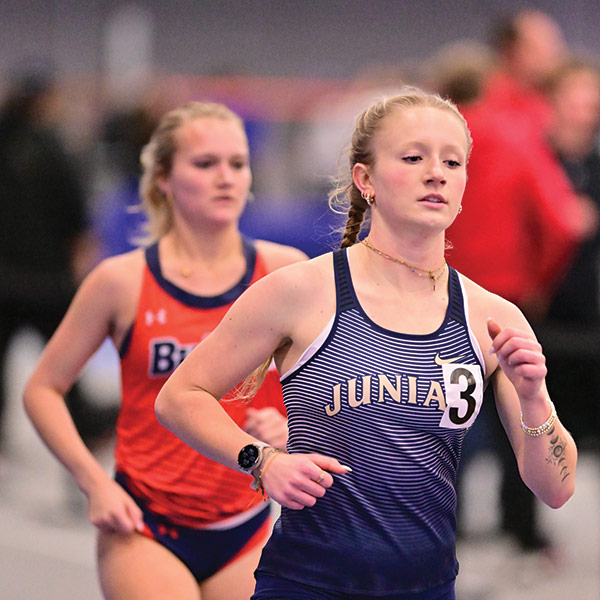
Track and Field Teams Set Records Across the Board
The Juniata Eagles closed their indoor season at Landmark Championships, highlighted by Ella McCrum ’29 placing third in the women’s 5,000m with a school record. Camille McRoberts ’27 finished fourth in the 800m. Gracie French ’28 broke records in the 60m and 200m, placing fifth in both. Josie Kelly ’26 and Rae Waight ’28 placed fourth and eighth in pole vault. On the men’s side, Gavin Robb ’27 was second in pole vault, with Spencer Siegel ’28, Deric Fritzges ’28, and Djemba Ndikwe ’29 posting top finishes. At the All-Atlantic Region Track and Field Conference (AARTFC), McCrum set another 5,000m record, finishing fifth.
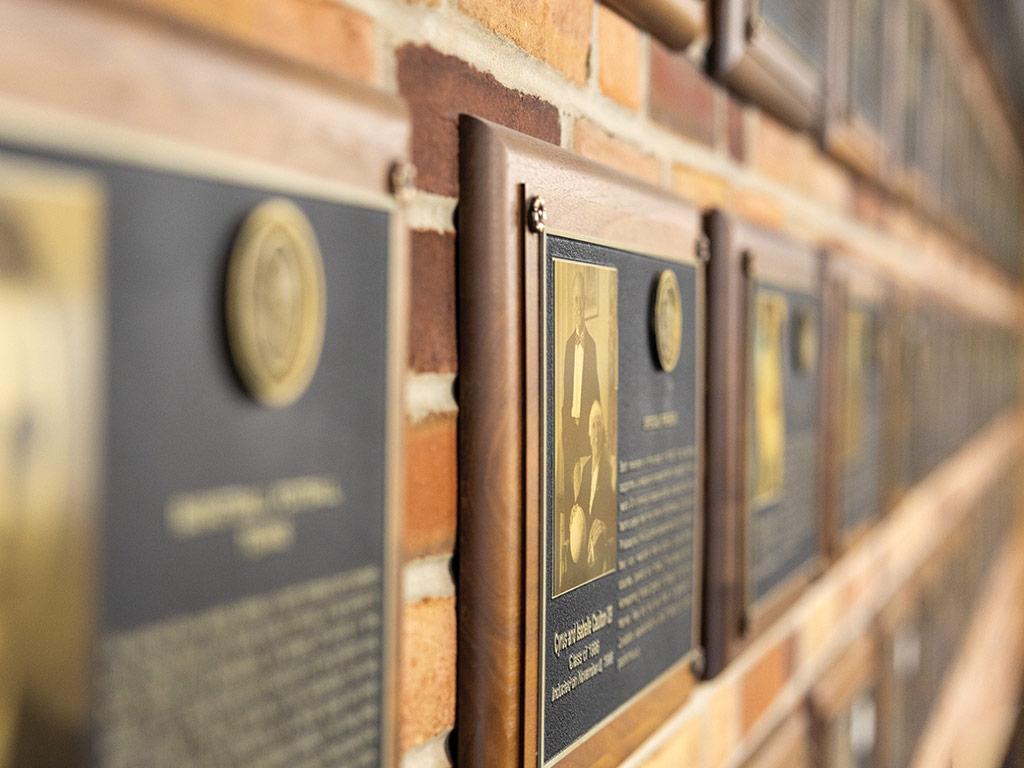
Joel Delewski ’70 (football, basketball, baseball) was a standout three-sport athlete at Juniata, earning
starts in basketball, baseball, and football. A three-time football letter winner,
he led the nation with three punt return touchdowns in 1967 and finished with 1,029
punt return yards and five career touchdowns.
Carolyn Stambaugh ’87 (volleyball) was a dominant volleyball player at Juniata and a leader whose legacy
endures through the Carolyn Stambaugh Award Endowment. A 1985 MAC MVP and NCAA All-Tournament
Team selection, she was a 1987 preseason All-American and set the NCAA single-game
solo blocks record.
Craig Moshier ’04 (football) is one of the most prolific running backs in Juniata football history,
appearing in the record book 34 times. He holds single-game and season rushing records
and ranks second in career rushing yards (3,164) and tenth in career receptions.
Meredith Troutman Zorn ’06 (volleyball, track and field) was a dominant sprinter at Juniata, capturing three
MAC championships in 2006 in the 100m, 4x100m, and 4x400m, and finishing second in
the 200m. She holds the outdoor 400m record and ranks among Juniata’s all-time leaders
in multiple indoor and outdoor events.
Jen Hnatuck Sealy ’11 (basketball) is one of the greatest centers in Juniata women’s basketball history.
She holds the single-season free-throw record (89%) and ranks top 10 in scoring, rebounds,
and blocks. A three-time Landmark All-Conference selection, she was Landmark Player
of the Year and a D3hoops.com All-American.
Meghan McGlone ’12 (field hockey) is one of the most decorated field hockey players in Juniata history.
A two-time NFHCA Division III All-American and Landmark Defensive Player of the Year,
she is the program’s only four-time First-Team All-Conference selection and helped
lead three straight conference championships and two NCAA Tournament appearances.
Joe Bortak ’15 (volleyball) was a four-time AVCA All-American, earning three first-team and one
second-team selections. A CVC Rookie of the Year and four-time All-East pick, he holds
Juniata’s career blocks record and helped win two conference championships and reach
the 2014 national championship match.
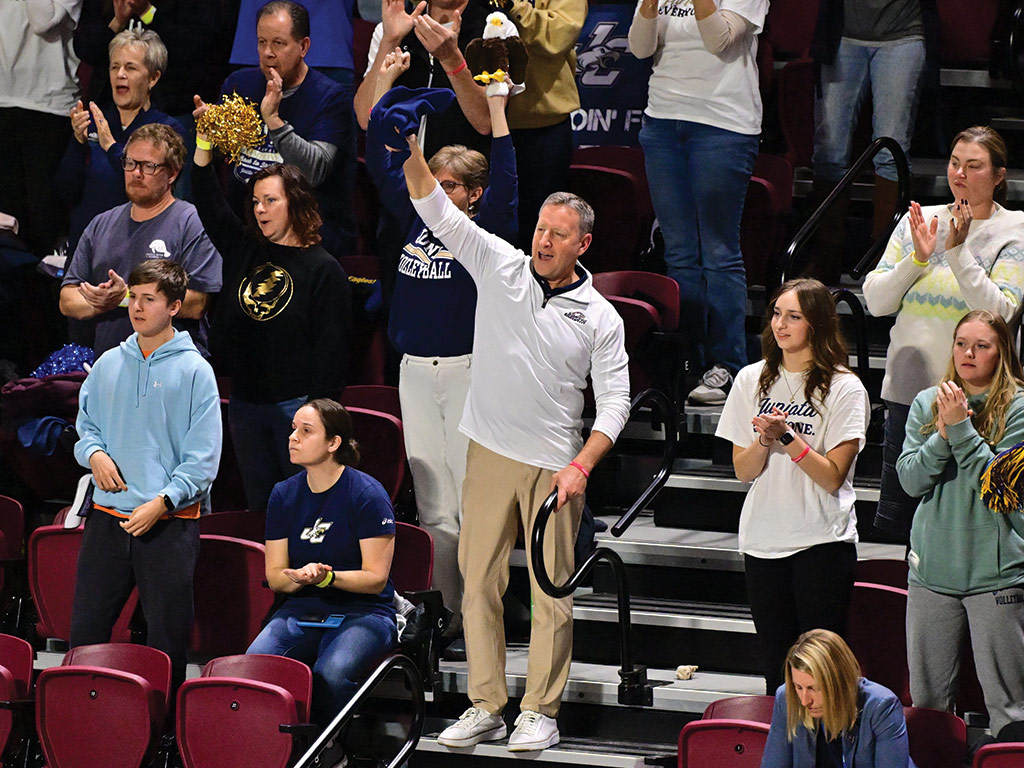
Making Their Mark
Juniata’s student-athletes are continuing a proud tradition of stand-out achievement, on and off the field. Some highlights: