
 Campus News
Board of Trustees Welcomes New Members and Chair
Juniata College celebrated the Class of 2025 at the 147th commencement ceremony on May 17. With their families and friends gathered on the quad, graduates marked the culmination of their academic journey.
 Carl D. Glaeser ’77 – Board Chair
Glaeser succeeds Mary M. White ’73 as Chair. A 1977 economics and political science graduate, he co-founded Palladian Capital Partners and has led numerous high-tech and global business ventures. He also co-founded GT Water, which provides sustainable clean water to over one million people worldwide. Glaeser has been a trustee since 2005 and received an honorary Doctor of Letters from Juniata in 2016.
 Jeremy Anagnos – Trustee
Anagnos is chief investment officer at CBRE Investment Management. A Boston College graduate in finance, he has held leadership roles with LaSalle Investment Management and Deutsche Bank. He also serves on CBRE’s Senior Leadership Council and Listed Real Assets Management Committee. Anagnos is the parent of Zack Anagnos ’27.
 Dr. Clay Cooper ’13 – Trustee
A family medicine physician with Geisinger Health System, Cooper earned his bachelor’s in biology and Spanish at Juniata in 2013. He holds an MBA and MD from Penn State and has been recognized with awards including the AAFP Award for Excellence in Graduate Medical Education and the WHO Young Leader Award.
 Angela (Montag) Jones ’01 – Trustee
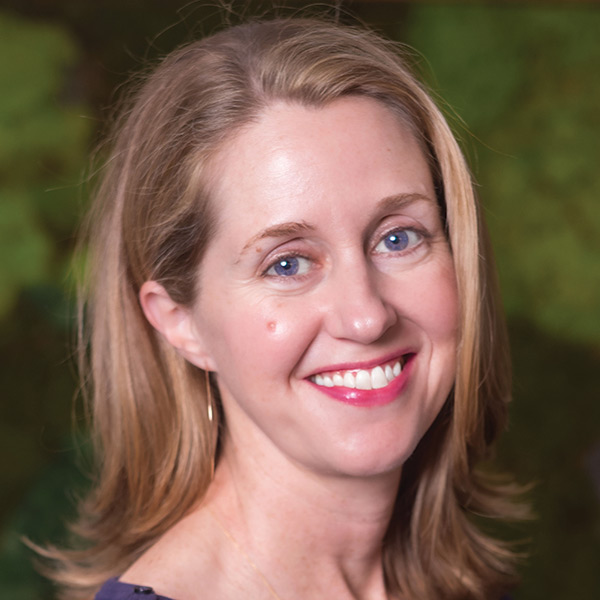
Jones is vice president of business and legal affairs at Netflix. She earned her JD from William & Mary after graduating from Juniata in 2001 with a degree in politics. She delivered Juniata’s 146th Commencement address in 2024 and received an honorary degree.
 Dr. James M. Metz ’89 – Trustee
Metz is chair of Radiation Oncology and the Henry K. Pancoast Professor at the University of Pennsylvania’s Perelman School of Medicine. A 1989 biology graduate of Juniata, he holds a master’s in clinical immunology and microbiology and an MD from Robert Wood Johnson Medical School. He delivered Juniata’s 147th Commencement address in 2025, receiving an honorary degree.
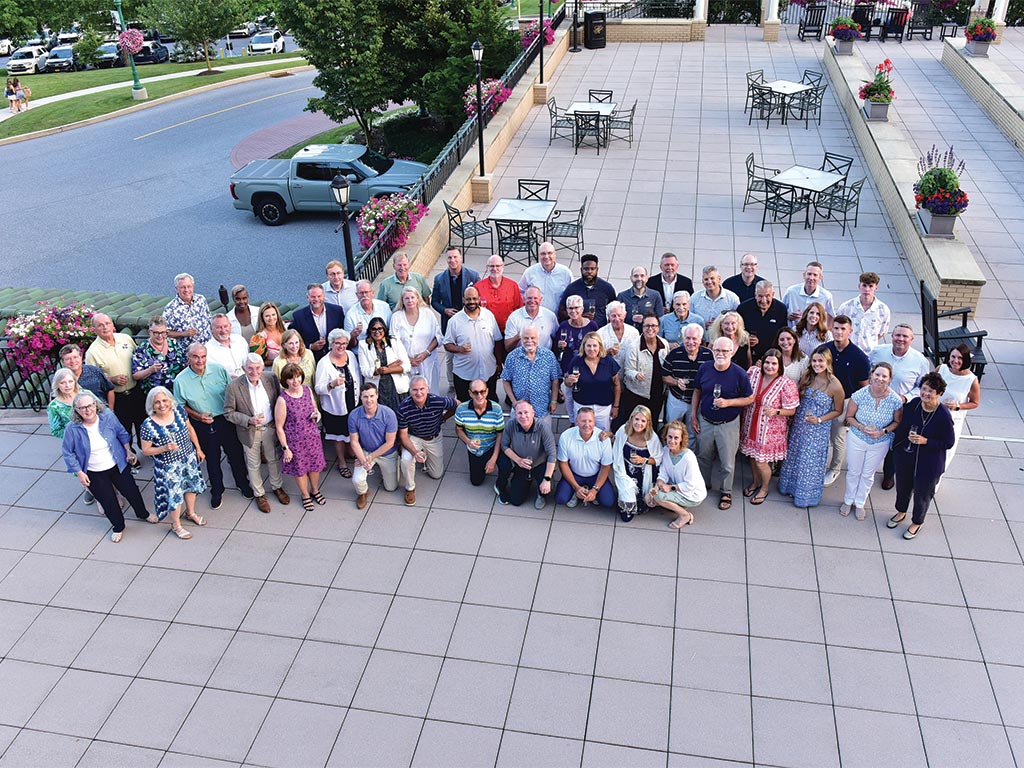
Above: Juniata’s Board of Trustees offered a toast to honor the opening of Juniata’s sesquicentennial year during the summer retreat.

Juniata Earns National Recognition for Academic Excellence and Social Mobility
Juniata College continues to earn national recognition for the quality, value, and impact of its education. U.S. News & World Report’s 2026 rankings place Juniata #92 among national liberal arts colleges, #57 in Best Value Schools, and #44 in Top Performers in Social Mobility, reflecting the College’s commitment to supporting students from diverse backgrounds.
The College also earned accolades from Washington Monthly, ranking #54 nationally among liberal arts colleges, #40 for outcomes, and #12 in service. These rankings highlight institutions’ contributions to social mobility, research, and public service, underscoring Juniata’s focus on preparing students to make meaningful contributions to society.
The Princeton Review named Juniata among the top 15% of four-year colleges nationwide, with notable rankings including #7 for Lots of Race/Class Interaction, #16 for Best Classroom Experience, #5 for Most Accessible Professors (#1 in Pennsylvania), and #23 for Great Financial Aid. These recognitions reflect students’ satisfaction with the College’s academic programs, faculty accessibility, and supportive learning environment.
Combined, these accolades demonstrate Juniata’s consistent dedication to academic excellence, student success, and creating opportunities that prepare graduates to thrive personally, professionally, and as engaged members of their communities.
Central Pennsylvania Regional Rural Health Summit Focuses on Solutions
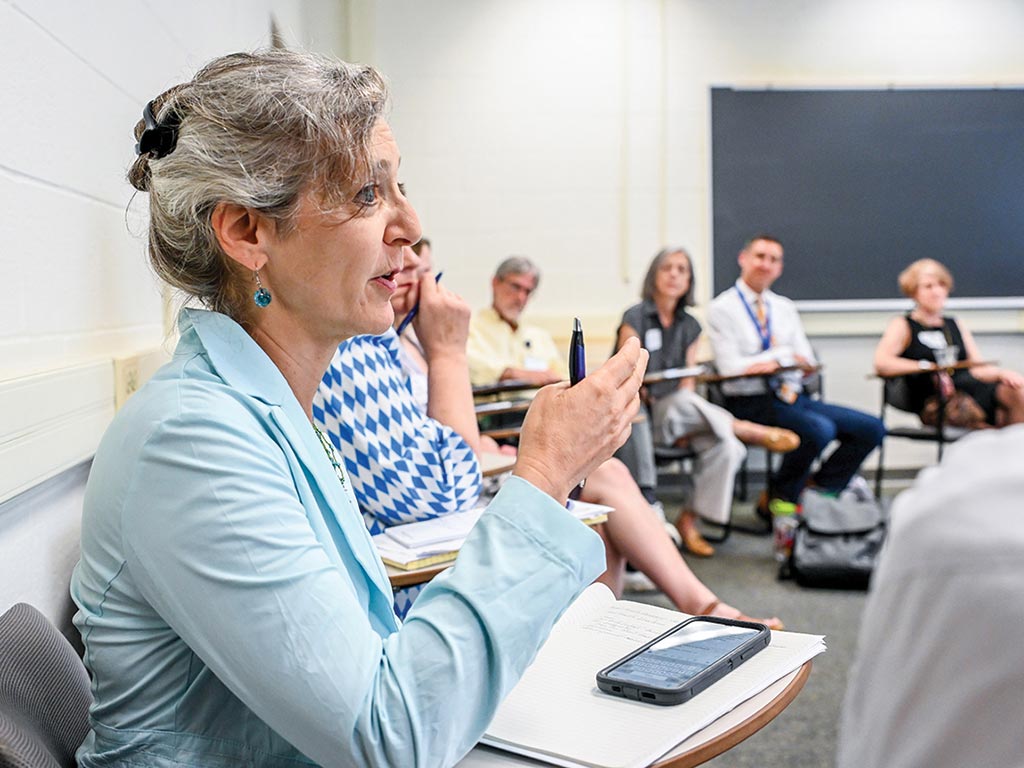
The Central Pennsylvania Regional Rural Health Summit was hosted by the Office of the Provost at Juniata College in June to bring together policymakers, healthcare leaders, and community representatives to address regional health challenges. The conference, themed Common Challenges. Local Differences. Shared Solutions., focused on eight counties, including Huntingdon, Bedford, Blair, Centre, Franklin, Fulton, Juniata, and Mifflin.
“The really important reason to have these regional rural health summits is that essentially everybody in rural communities is involved in having a healthy community because that is the way to ensure a robust economy and to make sure that there are other kinds of services that are available.”Lisa Davis, the director of the Pennsylvania Office of Rural Health
Key issues identified include limited access to care, behavioral health and substance abuse, chronic disease, and higher smoking and obesity rates compared to state averages. Life expectancy across the region varies by six years, with Huntingdon County at 77 years.
State Secretaries of Health, Human Services, and Aging discussed strategies to improve care access, including innovative models from the Centers for Medicare and Medicaid Services. The summit emphasized collaboration across counties, sharing solutions tailored to local needs, and connecting communities with state resources. This was the second of five regional summits across Pennsylvania. A follow-up summit will be held in February of 2026.
Chemistry Department Celebrates 100th Anniversary
Juniata’s Chemistry and Biochemistry Department kicked off a yearlong celebration of its 100th Anniversary in March with alumni events and Jerry Atwood as the John P. Reeves ’64 Distinguished Lecturer in Chemistry. Richard Hark, former professor of chemistry at Juniata, delivered the keynote speech.
Past and present faculty members Dale Wampler, Bill Russey, Paul Schettler, Don Mitchell, Lorraine Mulfinger, Peter Baran, Amber Helsel Ickes ’04, Sharon (Simpson) Yohn ’99, John Unger, Will Ames, Ursula Williams, and Kara Pytko, as well as President James Troha and Provost Lauren Bowen took part in the weekend events.
The basement of the former Students’ Hall held the first chemistry laboratory in 1896, followed by the construction of a general chemistry laboratory in 1916 on the third floor of what is now Good Hall. Juniata formalized chemistry as a department in 1925.
Alumni in attendance at the March event included Zuzana Baranova ’08, Jacalyn Clawson ’99, Michael Delosh ’22, Caitlin Eger ’08, Kirk Eidman ’82, Todd Emrick ’92, Konner Foor ’24, Carolyn George ’05, Marsha (Loth) Grimminger ’06, Robert Grimminger ’07, Jeanette Harijanto ’22, Bob Hatala ’52, Joseph Houck ’08, Ron Lenox ’69, Logan Peachey ’21, Jordan Pellegrino ’21, Heather (Gibney) Ramsey ’04, Dean Roth ’81, Alice Sayler ’68, Billy Jo Shilling ’80, Herb Sipe ’62, Kenna White ’24, Ryan Williams ’97, and Tara (Fitzsimmons) Yorke ’00.
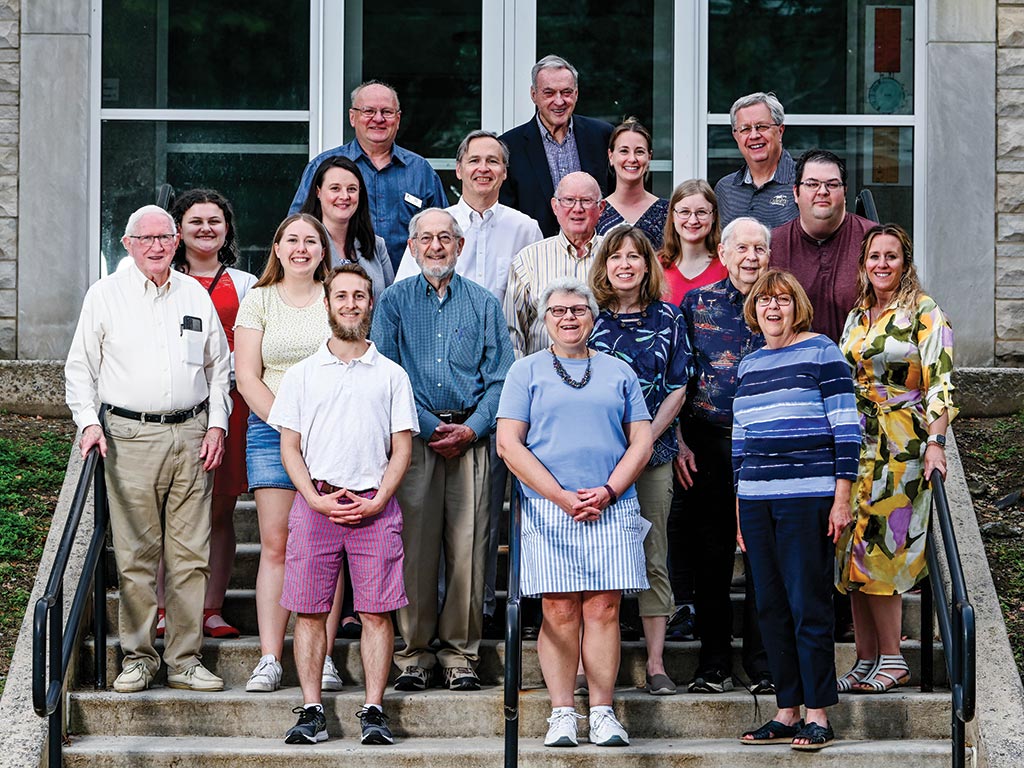
The celebration continued with a reunion during Alumni Weekend in June, where generations of Chemistry alumni gathered (above).
Weaver Memorial Park Softball Field Acquisition Benefits Community
Huntingdon Borough voted in favor of Juniata College’s acquisition of the softball field at Weaver Memorial Park in July. The $200,000 purchase is part of the College’s plan to upgrade the facility for the softball team while keeping it accessible to the community at no cost.
President James Troha emphasized that the acquisition is intended to enhance, not diminish, the park. Planned improvements include a new scoreboard, upgraded dugouts, and field renovations, preserving the legacy of George Weaver ’38. Troha highlighted the long-standing, mutually beneficial relationship between Juniata and the Huntingdon community, noting that the College has consistently invested in shared spaces to support both students and residents.
The purchase reflects Juniata’s commitment to athletics, community engagement, and strengthening local partnerships while ensuring the park remains a valuable resource for the borough.
“We’ve always tried to support and collaborate with the community in important ways because as the community rises, the College rises, and vice versa. We want the legacy of George Weaver ’38 to live on forever.”President James A. Troha
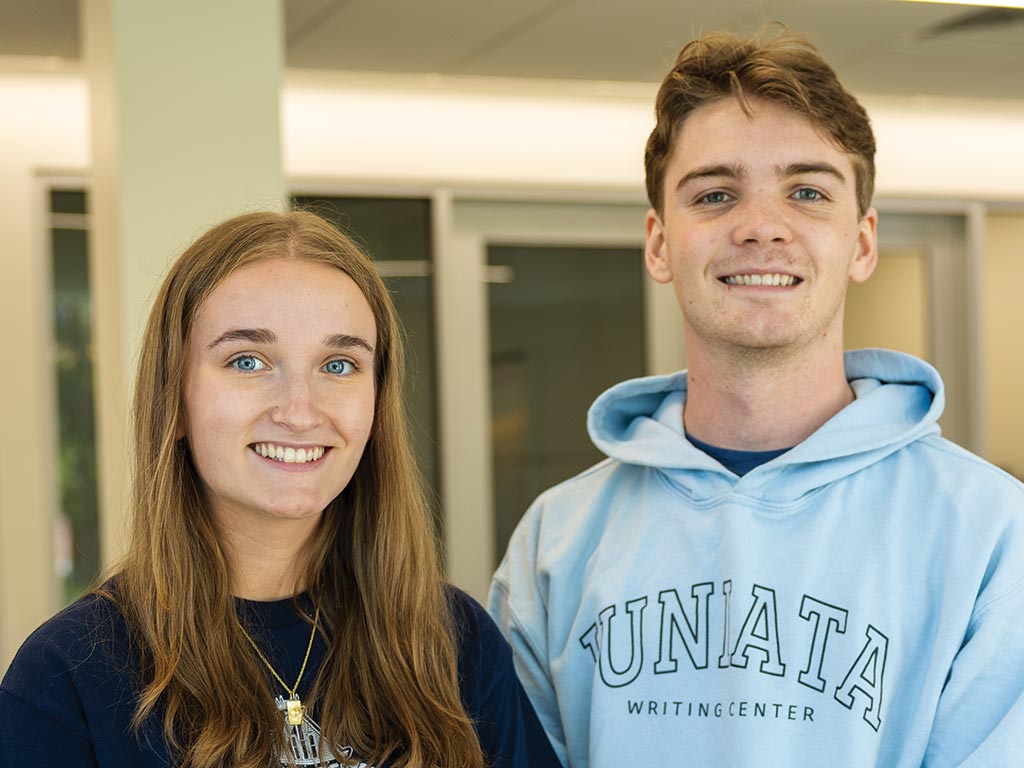
Madison Seipp ’26
Doylestown, Pa.
POE: History
Finn Thornhill ’26
Rockville, Md.
POE: History
Interview by April Feagley g'23
When you think about Juniata’s 150-year history, where do you see yourself fitting into that ongoing story?
Madison: Chronologically, I know I fit into just the most recent part of Juniata’s 150 years. I’ve only been here three years, which is such a small piece of the College’s long history. I hope that the work we’re doing now, especially with this project covering the last 25 years of Juniata’s story, will have an impact that goes beyond my own three years here. Even if my time as a student is short in the scope of Juniata’s history, the contributions I’ve made can still be part of something larger, something that connects to the College’s ongoing story.
“Juniata students Madison Seipp ’26 and Finn Thornhill ’26 are collaborating with Professor Jim Tuten to research and write the latest update of a book chronicling Juniata College’s rich history and enduring traditions.”
What was a moment when you felt most connected to the Juniata community, and how might that echo experiences of students from past generations?
Finn: During the third consecutive women’s volley-ball championship, everybody was down in Baker Refectory watching the game on the big screen, and it was a really proud moment. It was amazing to see everyone come together — from people who normally don’t care about sports, to students from countries where volleyball isn’t popular, to the team members themselves — everyone was celebrating, waving the inflatable batons. Similar moments happened in the past, like earlier volleyball championships or the ‘glory days’ of football in the 1950s. Those moments likely served as rallying points for campus pride.
What Juniata tradition has meant the most to you personally, and how do you imagine students 50 years from now will view that tradition?
Madison: My favorite tradition has always been Mountain Day. It brings the Juniata community together. I often see professors, staff, and faculty there. It’s really special to experience that sense of connection across the campus. Mountain Day has been a cherished tradition since 1896, and I think it will continue to be loved for generations. Even 50 years from now, I imagine students will still enjoy it for the same reasons we do: community, relaxation, and shared experiences. It’s one of Juniata’s enduring favorites, and I don’t see that changing anytime soon.
What challenges have you faced as a student here, and how do you think those struggles mirror or diverge from the challenges Juniatians faced in earlier eras?
Finn: A challenge that’s consistent historically for Juniata students is balancing academics with extracurriculars, clubs, and causes. Juniata has always been a very involved campus, with lots of organizations, performance groups, and athletic opportunities. For me, part of college is learning how to juggle different parts of your life. Every student has to learn that, because people come to Juniata and end up finding passions in the arts, athletics, or academic disciplines and put themselves fully into them. It’s a campus full of people who want to do a lot. Figuring out how to manage that is a challenge — but one that most students are capable of meeting.

The Big Question

Norris Muth, professor of biology at Juniata, explores the fascinating ties between pollinators, plants, and people, offering thoughtful insights into biodiversity, sustainability, and the small lives that shape our world.
How Do Pollinators and Juniata Reflect Sustainability?
Why are pollinators and their habitats so critical to both local ecosystems and global food systems, and how does Juniata’s work to become a designated pollinator-friendly campus reflect broader commitments to sustainability, ecological education, and student engagement?
It’s decorative gourd season, my friends, and what better time than the present to reflect upon the importance of pollinators? The great gourd itself, the humble pumpkin, produces separate male and female flowers, which require insect pollinators to act as reproductive couriers. Giant pumpkins, thankfully, do not require giant pollinators — no one would want that.
Juniata is certified as a Bee Campus USA, an initiative of the Xerces Society, which recognizes college communities that sustain pollinators by increasing the abundance of native plants, providing nest sites, and by reducing the use of pesticides.
I’ll tell you what I do want, what I really really want … pumpkin spice. But there’s no pumpkin spice without pollinators. No cinnamon or cloves without bees. No nutmeg or allspice without beetles. It’s a plain vanilla world out there without pollinators. Speaking of vanilla, the pollinators of the vanilla orchid are so rare and restricted in their range that commercial vanilla requires a tedious process of hand pollination. If humans aren’t more careful about the destructive impacts we too often create for the world’s pollinators, we could end up making other crops more expensive, or perhaps inviable altogether. Avocados and almonds, coffee and cocoa, apple varieties from Autumn Gold to Zestar! (yes, the trademarked name for Zestar! apples actually includes the punctuation).
What can we do to make our local environments more friendly to pollinators — bee, beetle, or bug? Our students and facilities staff, supported by Sustainability Director Celina Seftas ’07 have asked the same question and put in the effort to make Juniata both a Bee Campus (certified by the Xerces Society) and a Tree Campus (certified by the Arbor Day Foundation). As part of these certifications, we avoid the use of synthetic pesticides that are often lethal to beneficial insects. Students have created pollinator-friendly habitat using native plants — both in the form of flowers for nectar — and pollen-eating adults, as well as host plants for caterpillars and other juvenile insect stages. We avoid the showy invasive plants that, while they can feed adult insects, provide no food for baby beetles or butterflies. (The non-native butterfly bush, for instance, popular with adult butterflies, can’t feed the caterpillars.) The best habitats provide food and shelter for all stages of native insects, at the appropriate seasons. Most state natural resource agencies and local conservation organizations provide excellent information on how to create pollinator-friendly landscapes. Hopefully Juniata’s efforts can serve as an example to others, protecting biodiversity and safeguarding food security.
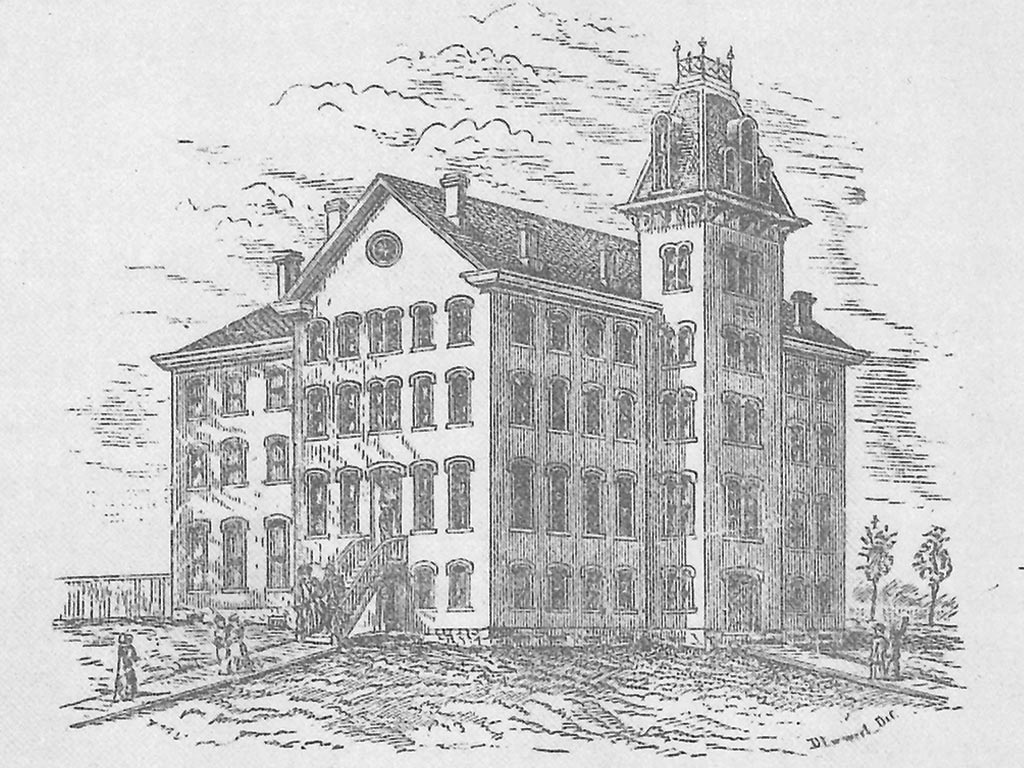
An illustration of Founders Hall, likely by early faculty member David Emmert, appeared in an advertisement for the College in the 1890s.
Milestones and Momentum
150 years of innovation and integrity
by April Feagley g'23Foundations and Firsts
Juniata’s story began in 1876 with the founding of the Huntingdon Normal School. In just a few short years, Founders Hall rose as the first permanent building, the Alumni Association was created, and traditions like Mountain Day and class reunions took root. By the turn of the century, Juniata welcomed its first international student and held its first intercollegiate athletic event — early signs of a college already looking beyond its borders.
Growth and Resilience
The early 20th century brought new traditions, challenges, and growth. The Bailey Oratorical began in 1910, and the Carnegie Library soon followed. Even through changing times, the College continued to expand enrollment, enrich the curriculum, and nurture the arts, including the founding of the Concert Choir in 1932.
Defining the Juniata Experience
By the mid-20th century, Juniata’s influence was felt locally and globally. Students and faculty marched
for civil rights in 1965, while new programs such as Peace and Conflict Studies, the Program of Emphasis (POE), and the Raystown Field Station set Juniata apart as a leader in experiential learning and social responsibility. Traditions like Madrigal, established in 1970, further defined the unique character of campus life.
Innovation and Legacy
In recent decades, Juniata has embraced change while honoring its roots. From becoming the first college to partner with the United Nations to celebrating a Nobel Prize alumnus, from pioneering sustainability with a LEED-certified Founders Hall to launching graduate programs, Juniata continues to evolve. As the College marks its 150th anniversary, it celebrates a legacy of innovation, resilience, and community that will carry forward for generations.
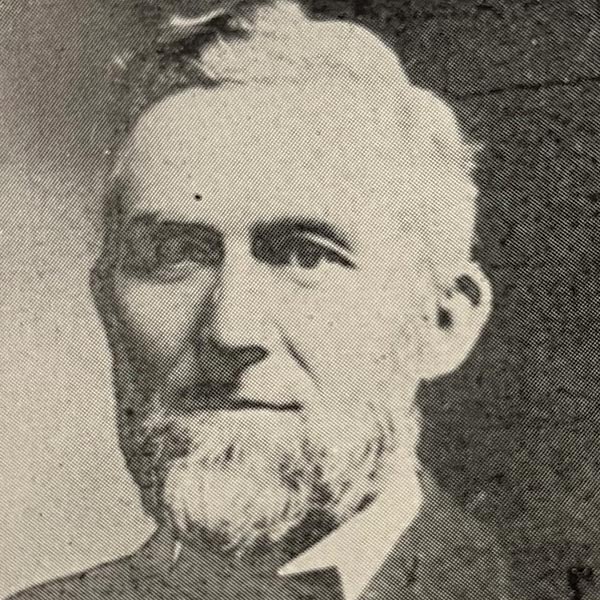
David Emmert (1854–1911) captured the earliest days of the College's history through his sketches and writing.
“When school opened in the new quarters, we were practically in the middle of a plowed field. Fences were not yet built nor walks laid out, and not a tree had been set.”David Emmert
Reminiscences of Juniata College: Quarter Century 1876–1901
Juniata College 150 Year Timeline
1876
Founding of Huntingdon Normal School
1879
Founders Hall completed
1885
Alumni Association founded with William Beery, Class of 1882, as president
1894
Renamed Juniata College
1896
First Mountain Day
1901
First Gymnasium built
1903
First Intercollegiate athletic event – a track and field meet against Susquehanna University
1907
Carnegie Library completed
1910
Bailey Oratorical begins
1912
First automobile on campus as Jacob Brumbaugh trades horse and buggy for Buick
1931
Largest enrollment to date – 534 students
1932
Juniata College Concert Choir created with the integration of the men’s and women’s choirs
1937
New curriculum designed to reflect Juniata’s philosophy of education
1953
Ford Foundation gifts Juniata $138,000 – the largest single gift to date
1965
A group of Juniata students and faculty joined civil rights demonstrations in Montgomery, Alabama, during the Selma to Montgomery pilgrimage
1971
POE Created
1974
Raystown Field Station established
1984
Baker Institute for Peace and Conflict Studies established
1993
Juniata becomes first college or university to contract with the United Nations to promote peace issues
1997
William Phillips ’70 wins Nobel Prize for Physics
2006
Liberal Arts Symposium established
2009
Founders Hall renovated, awarded a LEED Gold certification
2012
Juniata awarded the Simon Award for Comprehensive Internationalization
2014
Nathan Hall, the first new residence hall built on campus since the completion of the East Housing Residences in 1976, opens to students
2016
Winton Hill Athletics Complex, containing Gibbel Field and the Raffensperger Tennis Complex, was dedicated
2017
Kepple Hall, named in honor of president emeritus Tom Kepple and his wife, Pat, was completed
2018
General education curriculum transformed to prepare students to adapt to change
2020
Pandemic prompts move to remote instruction
2022
Construction begins on project to reimagine Beeghly Library and transform the facility into the Statton Learning Commons
2025
Nursing program approved and work begins on the Gateway Center
2025–2026
150th anniversary celebration
James Quinter
(1879–1888)
H.B. Brumbaugh
(1888–1893)
M.G. Brumbaugh
(1893–1910)
I. Harvey Brumbaugh
(1910–1924)
M. G. Brumbaugh
(1924–1930)
C.C. Ellis
(1930–1943)
Calvert N. Ellis
(1943–1968)
John N. Stauffer
(1968–1975)
Frederick M. Binder
(1975–1986)
Robert W. Neff
(1986–1998)
Thomas R. Kepple, Jr.
(1998–2013)
James A. Troha
(2013–present)
Lauren Bowen
Acting President (January–June 2024)

 Lacrosse
Women’s Lacrosse Secures No. 3 Seed, Advances in Postseason
Women’s lacrosse clinched the No. 3 seed in the Landmark Conference Playoffs and made an impressive postseason run, highlighted by a dominant 18–10 victory over Elizabethtown in the first round at Gibbel Stadium.
In stormy conditions, the Eagles pulled away in the second half behind standout performances from senior midfielder Peyton Goodrich ’25, who tallied five goals and an assist, and Ella McGlaughlin ’28, who netted four. Kelliann Drummond ’25 and Devyn Mauger ’26 each scored three times, while senior leader Kyndall Yeager ’25 added a goal, two assists, and six draw controls. On the defensive side, Maeve Kuser ’25 was relentless with five caused turnovers and four ground balls, and goalkeeper Mikayla Bodley ’27 anchored the net with six saves. Juniata outshot Elizabethtown 41–18, showcasing the offensive depth that defined their season.
The Eagles’ postseason ended in the semifinal round with a hard-fought loss to No. 2 seed Catholic on May 1, 2025, but their playoff win marked an exciting step forward for the program and capped a season filled with balanced scoring, gritty defense, and senior leadership.
 Volleyball
Women’s Volleyball Makes Historic Victory
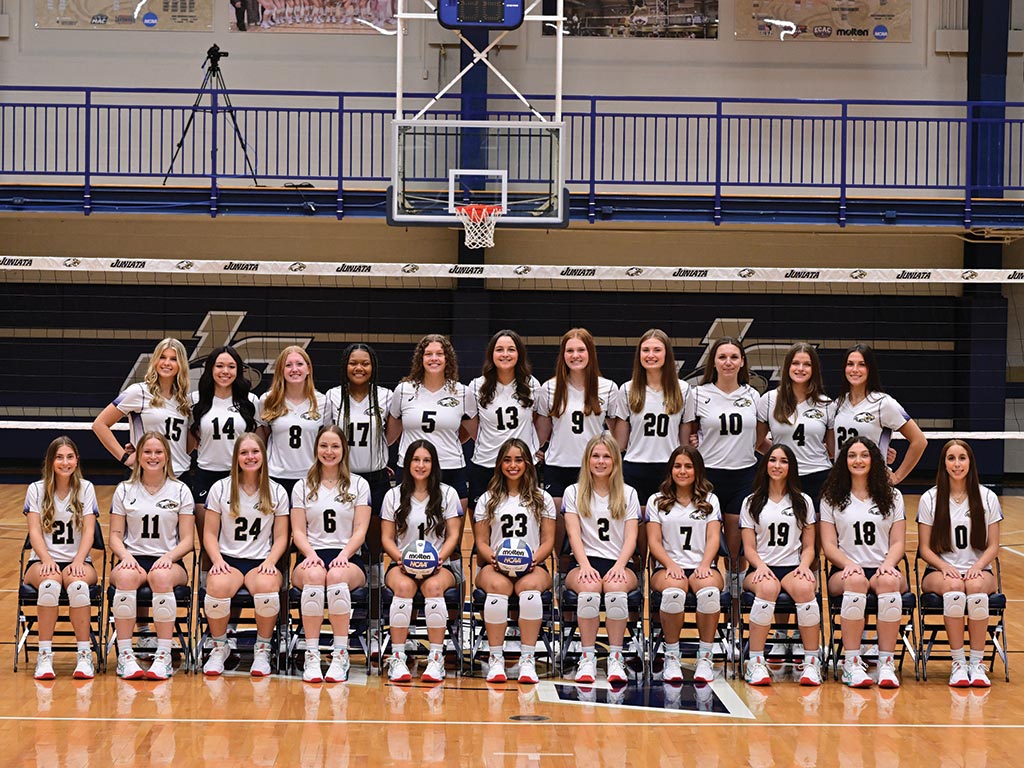
Women’s volleyball continued its historic run, notching its 100th consecutive victory with a sweep of a doubleheader at Tarble Pavilion on August 30, 2025. The Eagles topped SUNY Cortland, 3–1, before defeating UMass-Boston, 3–0, extending a winning streak that began in September 2022.
Against Cortland, Juniata powered through a tight four-set match that kicked off with 17 kills by Ava Gummer ’27, while Maggie Hayes ’27 and Audrey Muth ’26 added 13 and 12, respectively. Setter Elizabeth Cleveland ’29 tallied 46 assists, and Muth tied Isabella Rushing ’28 with 13 digs. In the nightcap, the Eagles dominated the Beacons, with Molly Mishinkash ’28 recording 11 kills and Cleveland adding 24 assists to secure the sweep.
The win highlights Juniata’s strength: 100 straight victories, spanning 1,078 days, with just 25 sets lost during the streak.
 Men's Tennis
Strong Singles Play Fuels Momentum
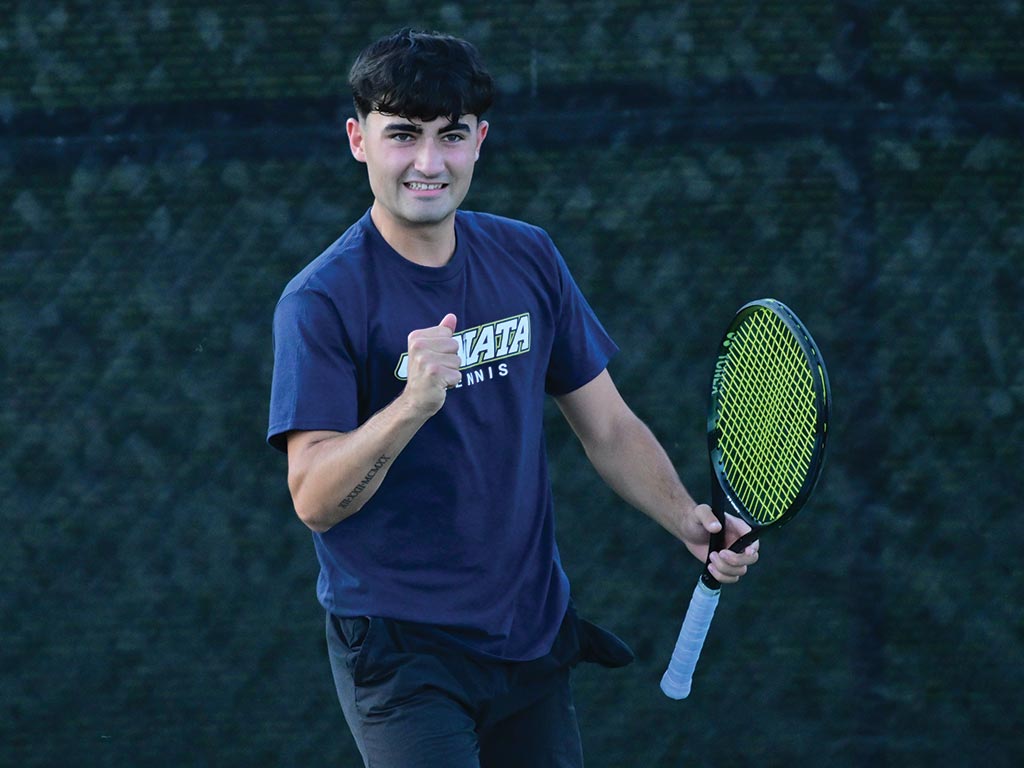
The Eagles men’s tennis team capped their season with a postseason appearance, clinching the No. 6 seed in the Landmark Conference Championship. Closing the regular season on a high note, they earned back-to-back victories over Lycoming and Wilkes to build momentum heading into the playoffs. Strong singles play anchored the team throughout the year, led by Gustaf Geremia ’28 (7–3) and Jules Guyot ’25 (6–4), along with Adrián DiBenedetto Vásquez ’27 (6–3). Together, the group helped Juniata post a 31–28 singles record, proving the team’s growth and consistency in individual matchups. While doubles play was more balanced at 13–13, the Eagles showed marked improvement late in the season, sharpening their game when it mattered most. Overall, Juniata finished the year 5–6 (4–5 Landmark), with a slight edge in home matches. Their postseason run began on the road at Drew on April 29, marking another step forward for the program.
 Women's Tennis
Eagles Earn Landmark Playoff Berth
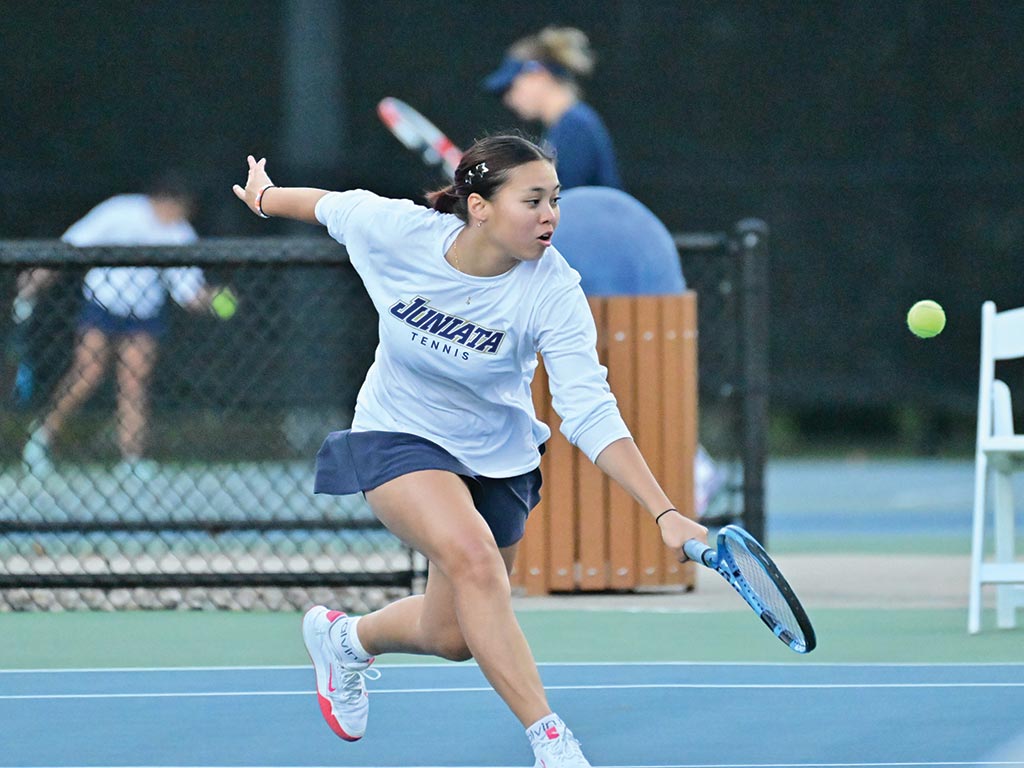
The women’s tennis team capped their 2025 campaign with a berth in the Landmark Conference Playoffs, earning the No. 6 seed after closing the regular season on a three-match winning streak. Powered by dominant singles play from Medina Yessenaliyeva ’27 (12–1) and Charley Madlock ’27 (10–2), along with strong doubles contributions from Nina Meadows ’28 and Celia Navarro de Torres ’27, the team entered postseason play with momentum. In their first-round matchup at Scranton, Juniata struck first with a 6–4 win at No. 1 doubles from Yessenaliyeva and Navarro, but Scranton responded to take the match 4–1. Yessenaliyeva delivered the Eagles’ lone singles victory, defeating Scranton’s top player in straight sets, 6–3, 6–2. Following the season, Yessenaliyeva was honored as a Landmark All-Conference First Team selection after a nearly flawless year in both singles and doubles, while Navarro de Torres earned Honorable Mention recognition, highlighting her consistency and impact across the lineup.
Titles Through Time: Juniata’s Championship Legacy
MASCAC = Middle Atlantic States Collegiate Athletic Conference
MAC = Middle Atlantic Conference
EIVA = Eastern Intercollegiate Volleyball Association
ECAC = Eastern College Athletic Conference
1951
Men’s Golf MASCAC Champions
1952
Men’s Golf MASCAC Champions
1954
Men’s Golf MASCAC Champions
1958
Football MASCAC Champions
1967
Football MASCAC Northern Division Tri-Champions
1973
Football MASCAC Northern Division Champions, Men’s Outdoor Track and Field MAC College Division Champions
1980
Women’s Cross Country MASCAC Champions
1981
Football MASCAC Northern Division Co-Champions, Women’s Volleyball MASCAC Champions
1982–1989
Women’s Volleyball MASCAC Champions
1990–1991
Women’s Volleyball MASCAC Champions, Baseball MASCAC Champions
1992–1994
Women’s Volleyball MASCAC Champions, Men’s Volleyball EIVA DIII Champions
1995–1997
Women’s Volleyball MAC Commonwealth Champions
1998
Women’s Volleyball MAC Commonwealth Champions, Men’s Volleyball EIVA DIII Champions, Men’s Volleyball Molten National Champions
1999
Women’s Volleyball MAC Commonwealth Champions, Men’s Volleyball EIVA DIII Champions
2000–2002
Women’s Volleyball MAC Commonwealth Champions
2003
Women’s Volleyball MAC Commonwealth Champions, Men’s Volleyball EIVA DIII Champions
2004
Women’s Volleyball MAC Commonwealth Champions, Baseball MAC Commonwealth Champions, Men’s Volleyball EIVA DIII Champions, Men’s Volleyball Molten National Champions, Women’s Volleyball NCAA National Champions
2005
Men’s Volleyball EIVA DIII Champions, Women’s Volleyball MAC Commonwealth Champions, Men’s Volleyball Molten National Champions
2006
Men’s Volleyball EIVA DIII Champions, Women’s Volleyball MAC Commonwealth Champions, Men’s Volleyball Molten National Champions, Women’s Volleyball NCAA National Champions
2007
Women’s Cross Country Landmark Champions, Field Hockey Landmark Champions, Women’s Volleyball Landmark Champions, Men’s Volleyball Molten National Champions
2008
Field Hockey Landmark Champions, Women’s Volleyball Landmark Champions
2009
Field Hockey Landmark Champions, Women’s Volleyball Landmark Champions, Men’s Volleyball Molten National Champions, Women’s Basketball ECAC Champions
2010
Field Hockey Landmark Champions, Women’s Volleyball Landmark Champions
2011
Women’s Basketball Landmark Champions, Women’s Volleyball Landmark Champions
2012
Women’s Volleyball Landmark Champions
2013
Men’s Volleyball CVC Champions, Women’s Volleyball Landmark Champions
2014
Men’s Volleyball CVC Champions, Field Hockey Landmark Champions, Women’s Volleyball Landmark Champions
2015
Men’s Tennis Landmark Champions, Women’s Volleyball Landmark Champions, Women’s Tennis ECAC Champions
2016
Women’s Volleyball Landmark Champions
2017
Men’s Volleyball CVC Champions, Field Hockey Landmark Champions, Women’s Volleyball Landmark Champions
2018–2019
Women’s Volleyball Landmark Champions
2021
Women’s Volleyball Landmark Champions
2022
Women’s Volleyball Landmark Champions, Women’s Volleyball NCAA National Champions
2023
Men’s Volleyball CVC Champions, Women’s Volleyball Landmark Champions, Women’s Volleyball NCAA National Champions, Men’s Basketball ECAC Champions, Women’s Lacrosse ECAC Champions
2024
Women’s Volleyball Landmark Champions, Men’s Soccer ECAC Champions, Women’s Volleyball NCAA National Champions