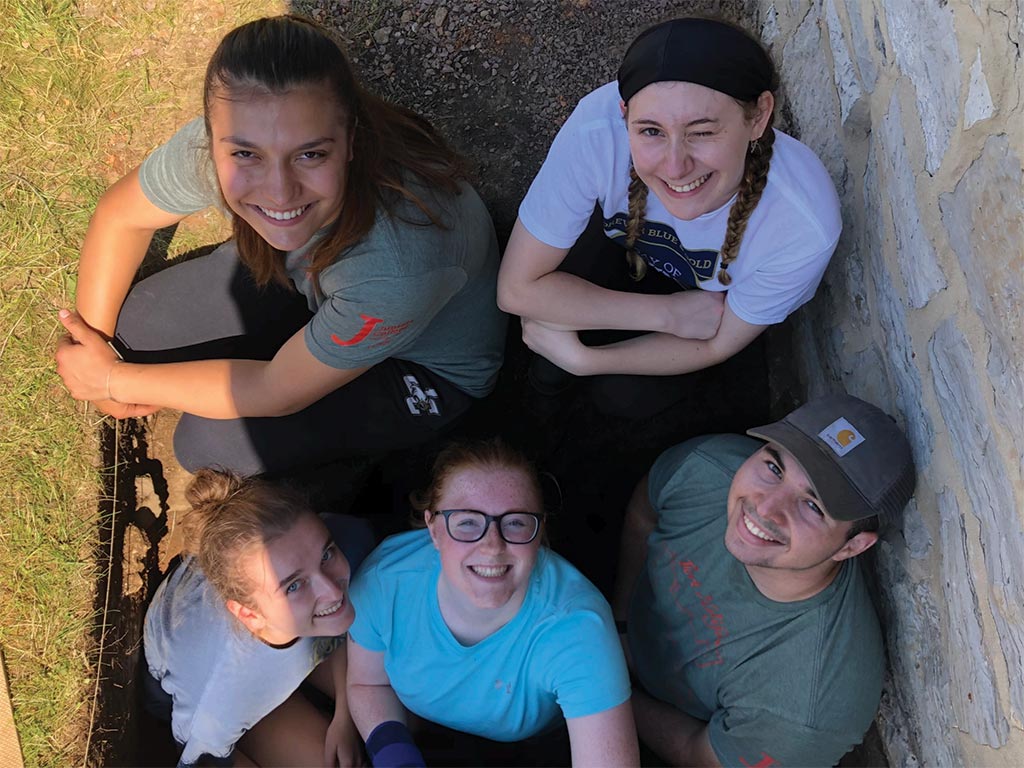
Student archeologists working on the dig at the Hessian Powder Magazine were, clockwise from the top left, Lauren Metzger ’25, Mia Destefano ’26, Madison Seipp ’26, Abigail Maston (student at Dickinson College), and Sam Lonstein ’26.

Students Unearth Military Origins
Juniata team confirm Hessian Powder Magazine as nation’s first arsenal.
A team of student archaeologists led by Jonathan Burns, director of Juniata’s Cultural Resource Institute, enlisted in the U.S. Army War College’s effort to investigate the origins of the nation’s oldest Army-owned structure at Carlisle Barracks.
Now known as the Hessian Powder Magazine and historically referenced as the “Hessian Guard House,” the rectangular stone structure’s distinctive architecture includes walls more than four feet thick with slits for ventilation and a high, peaked roof. Burns, along with students Lauren Metzger ’25, Madison Seipp ’26, Sam Lonstein ’26, and Mia Destafano ’26, set out to discover whether or not the stories behind the building were true.
Believed to be a facility designed for the storage and protection of black powder built in 1777 by Hessian mercenaries captured at the Battle of Trenton and held as prisoners of war, the structure has been used as a guardhouse and miscellaneous storage over the past two centuries.
While architectural historians examined the structure above ground, Burns and his team were tasked with exploring what lay beneath. Using ground-penetrating radar with Jim Stuby ’94 to guide excavation, the team discovered buttresses consistent with the Vauban style of 18th-century powder magazines, confirming the structure’s original use as the first U.S. military arsenal.
"The Hessian Powder Magazine was my first experience with archaeological fieldwork, so I learned a lot in the 10 days we spent there. I learned how closely connected history and archaeology are, and I really enjoyed the experience of being so hands-on with history — it doesn’t get much more hands-on than holding a nail that’s over 200 years old. My favorite part of the dig was finding the remains of a glass bitters bottle from the late 19th century. We put together the shards of glass we found like pieces of a puzzle and were able to do some quick research to find the company and time period in which that type of bottle was manufactured.
It was one of those moments where history and archaeology really intertwined, which was a cool experience as a history POE."Madison Seipp ’26
"Being a student at the Hessian Powder Magazine allowed me to deepen my understanding of archaeological practices and interact with history firsthand.
One of the most memorable discoveries was when we uncovered a golden eagle button dated to before the Civil War. From the location of this button and its age, we were able to determine more about the history of the structure and help understand its transition from a Revolutionary War powder magazine to a guardhouse and finally to a museum."Lauren Metzger ’25
"Working on the Hessian Powder Magazine was one of the best archaeology experiences of my life.
It expanded my understanding by showing me that archaeology can be done in any setting, even on an active military base. My perspective on the American Revolution wasn’t changed so much as I gained even more respect for those who took part in fighting for our freedom after having seen the facilities that they had to work with. My most memorable discovery was when I found the only musket ball on the site towards the end of the dig. It was an incredible experience and I am forever thankful to Dr. Burns for the opportunity."Sam Lonstein ’26
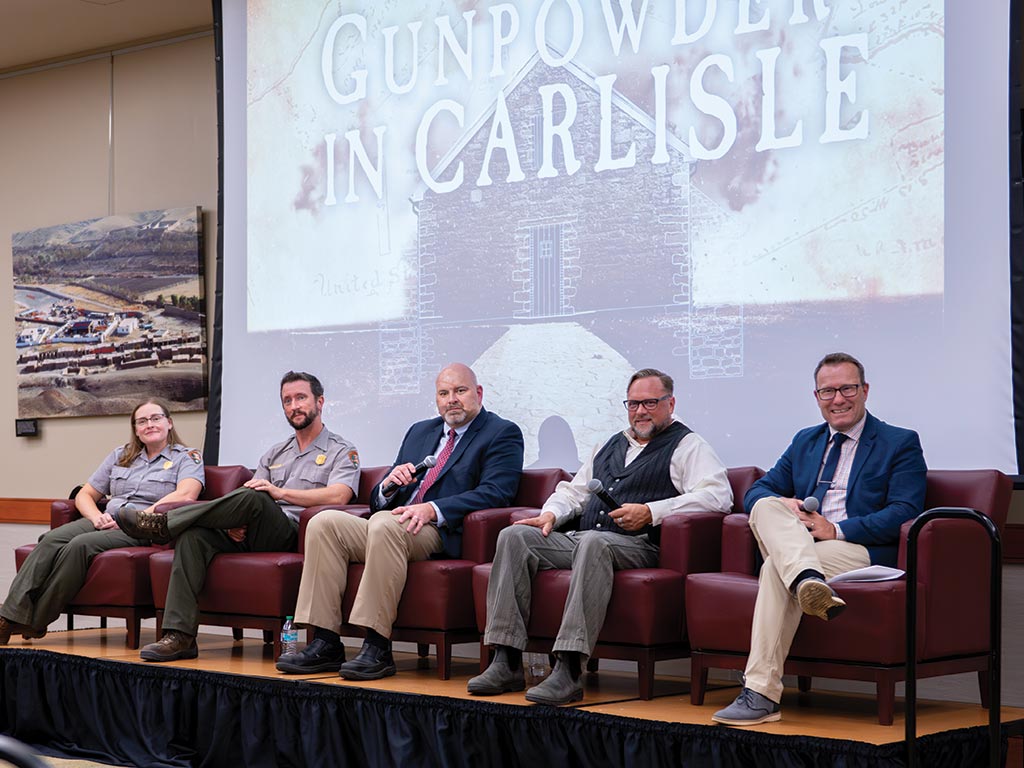
Jonathan Burns participated in a panel discussion at the release of the U.S. Army War College’s documentary, Gunpowder in Carlisle.
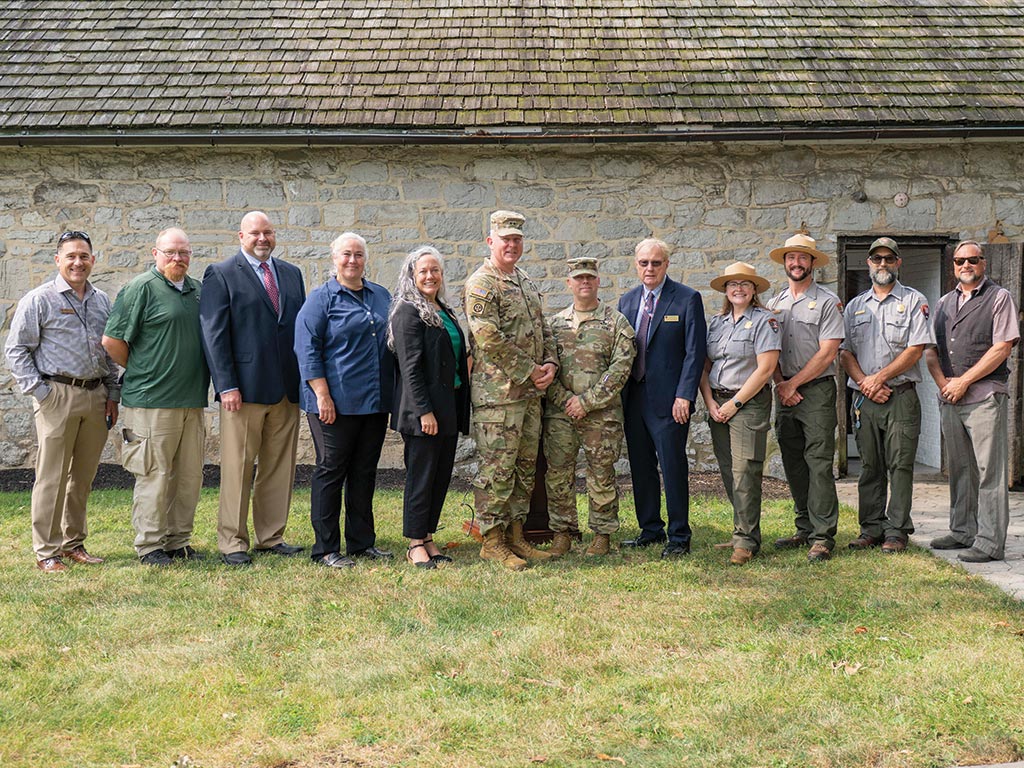
The team that set out to confirm the Hessian Powder Magazine’s status as the oldest Army-owned structure in the nation worked in conjunction with the U.S. Army War College.
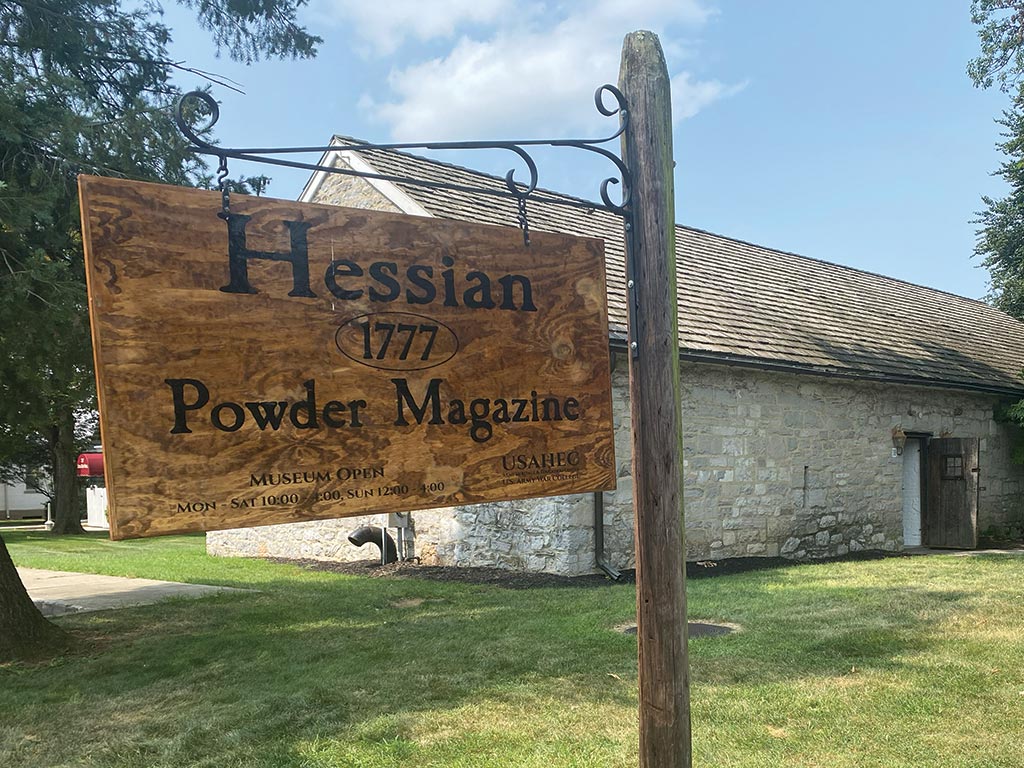
The Hessian Powder Magazine is a rectangular stone structure with distinctive architecture including four-foot thick walls with slits for ventilation, used during the American Revolution to store black powder.
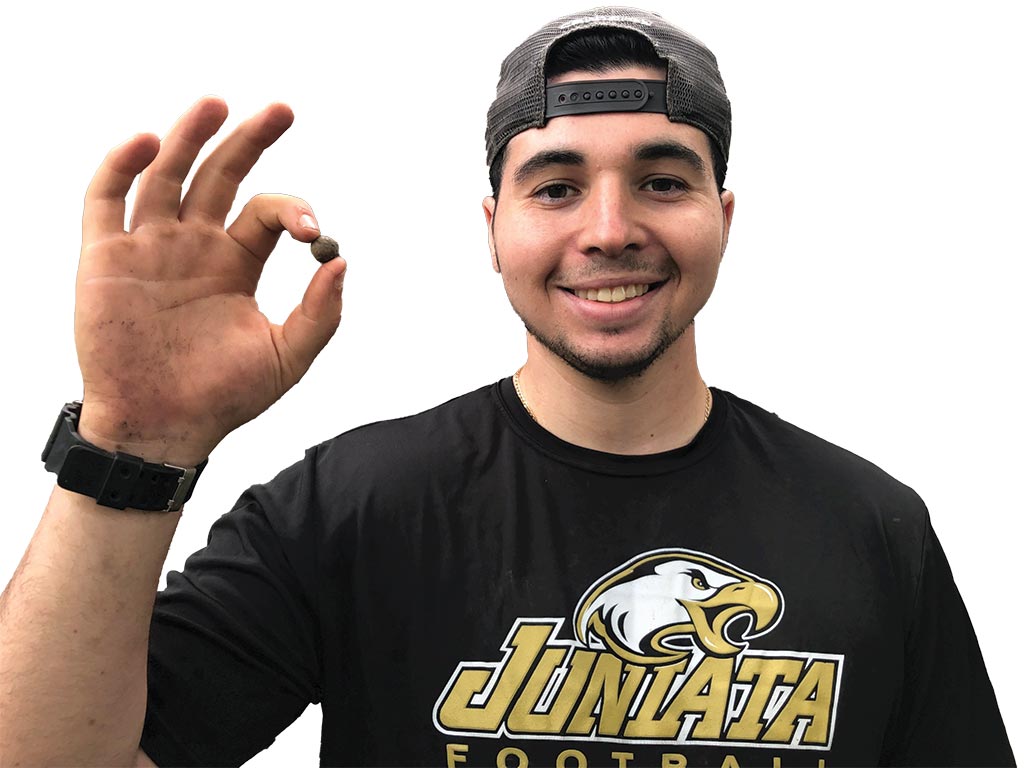
Sam Lonstein ’26 discovered a “pb ball,” a projectile made of lead used in muzzle-loading muskets during the era.